Film étirable pour machine
Release time: 2026-04-06
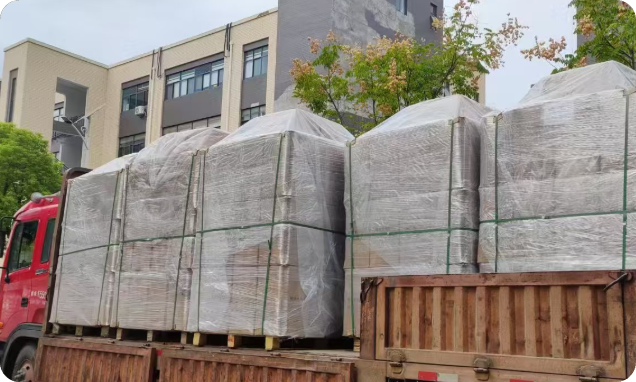
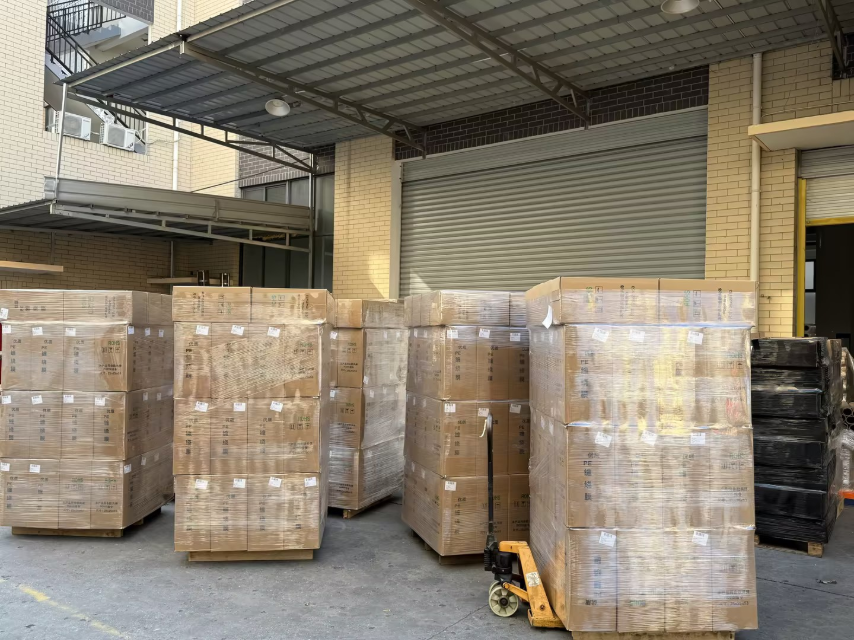
Machine Stretch Wrap Film (hereinafter referred to as “machine film”) is a stretch wrap product specially designed for automated packaging equipment such as fully automatic / semi-automatic wrapping machines, rotary arm wrappers, and ring track wrappers. Made primarily from linear low-density polyethylene (LLDPE) with toughening and tackifying additives, it is manufactured via casting or co-extrusion technology. As a core packaging consumable in automated warehousing, logistics transportation, industrial manufacturing and other fields, its main functions are to secure and protect palletized goods, solving problems of loosening, damage and moisture during the handling, storage and transportation of bulk cargo.
- Core Parameters & Specifications
Key selection criteria for machine film fall into four core parameters, which directly determine packaging performance, cost and efficiency.
1.1 Basic Specifications (Key Selection Indicators)
- Thickness: Commonly 15μm, 18μm, 20μm, 23μm, 25μm. Higher thickness improves tensile and puncture resistance but increases cost. Light goods (cartons, small items): 15–18μm; heavy goods (mechanical parts, chemical drums): 20–25μm.
- Width: Standard 500mm, 550mm, 600mm. Must match the film carriage of the wrapping machine and pallet size (standard pallet 1200mm×1000mm, with 600mm being the most versatile).
- Length: 300m–1500m per roll. Longer length reduces film roll changes, improves efficiency, and is critical for cost control.
- Core diameter: Standard 3 inches (76mm), compatible with most automatic wrapping machines; customizable for special equipment.
1.2 Core Performance Parameters
- Elongation rate: Divided into longitudinal (key indicator) and transverse elongation. High-quality machine film has longitudinal elongation ≥300%, supporting high-speed wrapping (≥30m/min) and reducing film breakage.
- Tensile strength: Resistance to breaking under tension, measured in N/mm². Higher value means greater durability for heavy cargo.
- Tear strength: Resistance to puncturing by sharp edges (metal corners, wooden pallet nails), directly determining cargo protection performance.
- Tackiness: Available in single-sided and double-sided. Tackiness must be moderate — excessive tack causes entanglement and jamming; insufficient tack fails to secure loads. Machine film is usually pre-treated to match automated wrapping cycles.
- Temperature resistance: Suitable for -20°C to 60°C, meeting general storage and transportation requirements. Custom low-temperature grades are available for cold-chain logistics.
2.Main Classifications (By Process & Application)
2.1 By Production Process
- Cast machine film: High production efficiency, excellent flatness and clarity, ideal for high-speed wrappers, cost-effective. Suitable for general goods (cartons, food, daily necessities).
- Co-extruded machine film: Multi-layer co-extrusion structure, with superior tensile strength, puncture resistance and long-lasting toughness. Suitable for heavy or sharp cargo (mechanical parts, chemicals, metal sheets).
2.2 By Function & Application
- General-purpose machine film: Suitable for most scenarios, balancing stretch, tack and protection. Widely used in e-commerce and manufacturing.
- Moisture-proof machine film: High-density raw materials with low air permeability. Ideal for rainy seasons, cold chains and ocean shipping to prevent moisture damage and label peeling.
- Food-grade machine film: Complies with national food contact material standards (GB 4806 series), odorless and non-toxic. Suitable for food, beverage and pharmaceutical industries to ensure product safety.
- High-speed machine film: High tensile strength and ductility, compatible with wrapping speeds over 30m/min, reducing downtime. Ideal for peak logistics seasons and high-volume shipments.
3.Core Advantages (vs. Hand Wrap Film)
| Comparison Items | Film étirable pour machine | Hand Stretch Wrap Film |
| Compatible Equipment | Fully / semi-automatic wrappers | Manual hand wrapping |
| Wrapping Efficiency | High-speed operation, ≤30 seconds per pallet | Manual wrapping, 2–5 minutes per pallet |
| Stretch Utilization | Elongation over 300%, high material efficiency | Elongation ≤200%, high material waste |
| Packaging Consistency | Uniform tension, firm and neat wrapping | Uneven manual force, prone to loosening |
| Cost Efficiency | Reduces labor and film changes, overall cost 15–30% lower | High labor cost, low efficiency |
| Scénarios d'application | High-volume, automated packaging | Small-batch, occasional packaging |
4.Key Points for Purchase & Use
4.1 Purchase Guide
1. Check raw materials: Prefer pure LLDPE; avoid inferior films with recycled materials (prone to breaking, yellowing, poor protection).
2. Match equipment: Select based on wrapper type (rotary arm / ring) and speed. High-speed machines require high-tensile, puncture-resistant co-extruded film.
3. Match cargo type: Light goods → thin film (15–18μm); heavy goods → thick film (20–25μm); sharp goods → enhanced puncture resistance (co-extruded); food goods → food-grade film.
4. Verify test reports: Check elongation, tear strength and food contact certification (if required) to avoid low-cost, low-quality products.
4.2 Efficient Usage Tips
1. Equipment adjustment: Set wrapping tension according to cargo weight — higher tension and more layers for heavy loads; lower tension to avoid over-stretching and breakage for light loads.
2. Wrapping pattern: Use “reinforced bottom + full middle coverage + top sealing” to prevent slipping, loosening, rain and dust.
3. Storage conditions: Store in cool, dry, ventilated areas. Avoid direct sunlight (causes aging and yellowing), high temperatures and sharp objects. Shelf life: 12–18 months.
- Full Coverage of Application Scenarios
1. Industrial manufacturing: Pallet packaging for wires & cables, mechanical parts, chemicals, metal sheets, securing heavy cargo and preventing shifting and scratching.
2. Logistics & warehousing: High-volume packaging for e-commerce FMCG and third-party logistics, matching automated assembly lines and meeting peak shipping demands.
3. Food & beverage: Pallet wrapping for beverages, canned goods and fresh produce. Food-grade and moisture-resistant film prevents label peeling and moisture damage.
4. Cold chain & cross-border logistics: Protection for cold-chain and ocean freight, with low-temperature resistance and high moisture barrier for full cargo safety.
5. Home & building materials: Packaging for tiles, stone and pipes, avoiding transport damage and surface scratches to preserve appearance.
- Common Misconceptions & Precautions
1. Misconception 1: “Thicker film is always better” — Thick film increases cost unnecessarily for light cargo. Select thickness based on cargo weight.
2. Misconception 2: “Higher tackiness is better” — Excessive tack causes machine jamming and difficult unpacking. Moderate tack is optimal.
3. Misconception 3: “All machine film is universal” — Compatibility varies by equipment and cargo. Customize for actual conditions instead of one-size-fits-all.
4. Precautions: Regularly maintain film carriages and sensors on automated equipment to avoid uneven wrapping. Use opened film rolls promptly to prevent moisture loss of tackiness.